

The Distance Between What We Value and What We Choose
A Contemplation

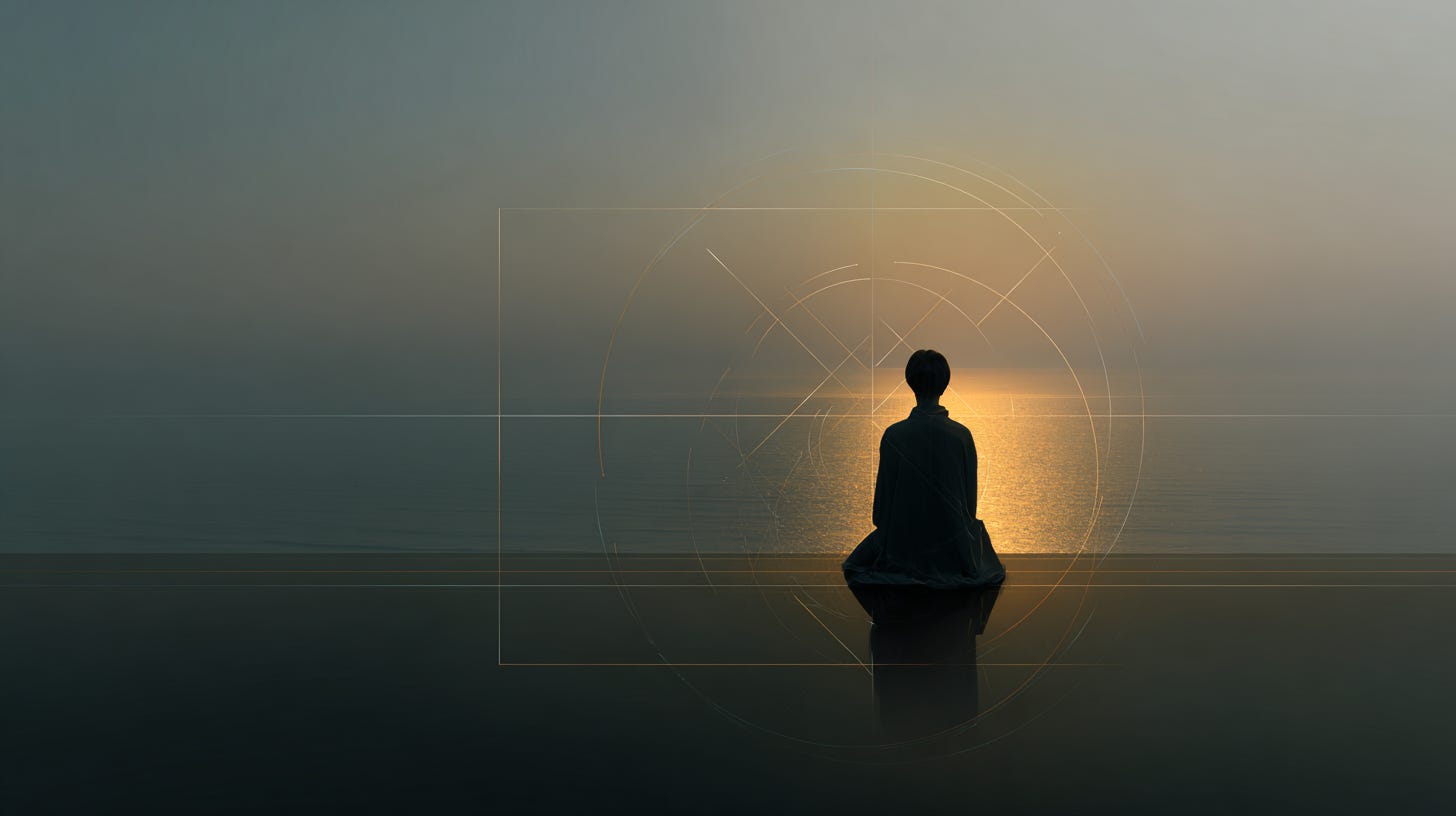
Lately, I’ve been thinking about choice.
Not the big choices that mark the milestones of our lives—whether to change careers, move across the country, or begin a new relationship. I’ve been thinking about the smaller ones: the choices we make every day, almost without noticing, that quietly shape our lives and, collectively, the future we are building.
This started in an ordinary way. I was exploring new AI tools for my photography business—curious, a little excited, the way I tend to be about anything new. The technology is incredible. But as I read, I drifted from what these tools could do to what they require: data centers, electricity, and water to keep them cool. And somewhere in that reading, I found myself sitting with a question I hadn’t expected.
Is this aligned with what I value?
The question, I realized, wasn’t really about AI. It was about choice. About values. And about the distance that can quietly open up between the two.
When I paused long enough to actually answer it, I found I already knew what I value.
Being present in my own life.
Health, time outdoors, and the kind of beauty that leaves you speechless.
Long walks, slow meals, real conversation.
Stillness, and the spaciousness that lets wonder in.
None of this was a revelation. I’d just stopped looking at it.
What surprised me was the thought that followed:
Values aren’t revealed by what we say.
They’re revealed by what we choose.
If I value health, it shows up as movement, rest, and a real meal instead of whatever’s fastest.
If I value presence, it shows up in the empty moment I don’t fill with a screen.
If I value wonder, it shows up as time left in the day for something that can’t be measured or optimized.
Choice, I started to see, isn’t something you make once and resolve. It’s something you practice—daily, in small increments, mostly when no one is watching.
And then my thinking widened.
If you asked most people what they want from life, I suspect their answers would sound remarkably alike.
Love.
Connection.
Health.
Purpose.
Time with the people who matter.
The chance to enjoy this brief, improbable experience of being alive.
Most of us want some version of the same things.
So why does the world we’re building so often look like something else?
That’s the question I keep circling.
Not what do we want—we mostly agree on that—but what are we actually choosing?
Because every choice reveals a value, whether we mean it to or not.
Convenience or stewardship.
Speed or presence.
Efficiency or beauty.
Growth at any cost, or something we could actually live with for the long run.
The choices are rarely dramatic. They almost never announce themselves. They arrive disguised as ordinary moments—how we spend an hour, what we give our attention to, what we buy, what we quietly support, and whether we pause at all or simply move on to the next thing.
Any one of those choices seems too small to matter.
But when repeated across days, years, and generations, small choices are precisely what become culture.
They become systems.
They become the world.
I don’t say this as criticism.
I have no clean answer, and plenty of my own contradictions. I’m still using the very technology that started this reflection.
But I’ve found myself returning to one question more than any other:
Are my choices coherent with my values?
It’s a harder question than it sounds because coherence requires something that has become genuinely rare.
A pause.
Without the pause, there is only momentum—habit, reaction, the next thing, and the next.
But inside the pause, something else becomes possible.
Awareness becomes possible.
You can step back and ask what you actually value, and then ask the more uncomfortable question:
Does the life I’m building reflect it?
Which brings me back to where this began—that afternoon with a new AI tool open in front of me, marveling at what it could do, then reading about the water and power it takes to do it.
I haven’t resolved that one.
I’m not sure resolving it is even the point.
What changed wasn’t my answer; it was that I stopped to ask at all.
I let the moment become a choice instead of a reflex.
Maybe that’s the whole thing.
Maybe the future isn’t built by a handful of monumental decisions, but by millions of ordinary choices, repeated over time.
And maybe the first step—before any grand realignment of how we live—is simply to pause long enough to remember that a choice was there to make.
